Prop Trading vs Retail Trading: What’s the Difference?
In the world of financial markets, two types of traders dominate the scene—proprietary traders and retail traders. While they may seem similar on the surface (both buy and sell in hopes of turning a profit), the differences between them are significant and can define a trader’s journey, resources, risk, and potential rewards.
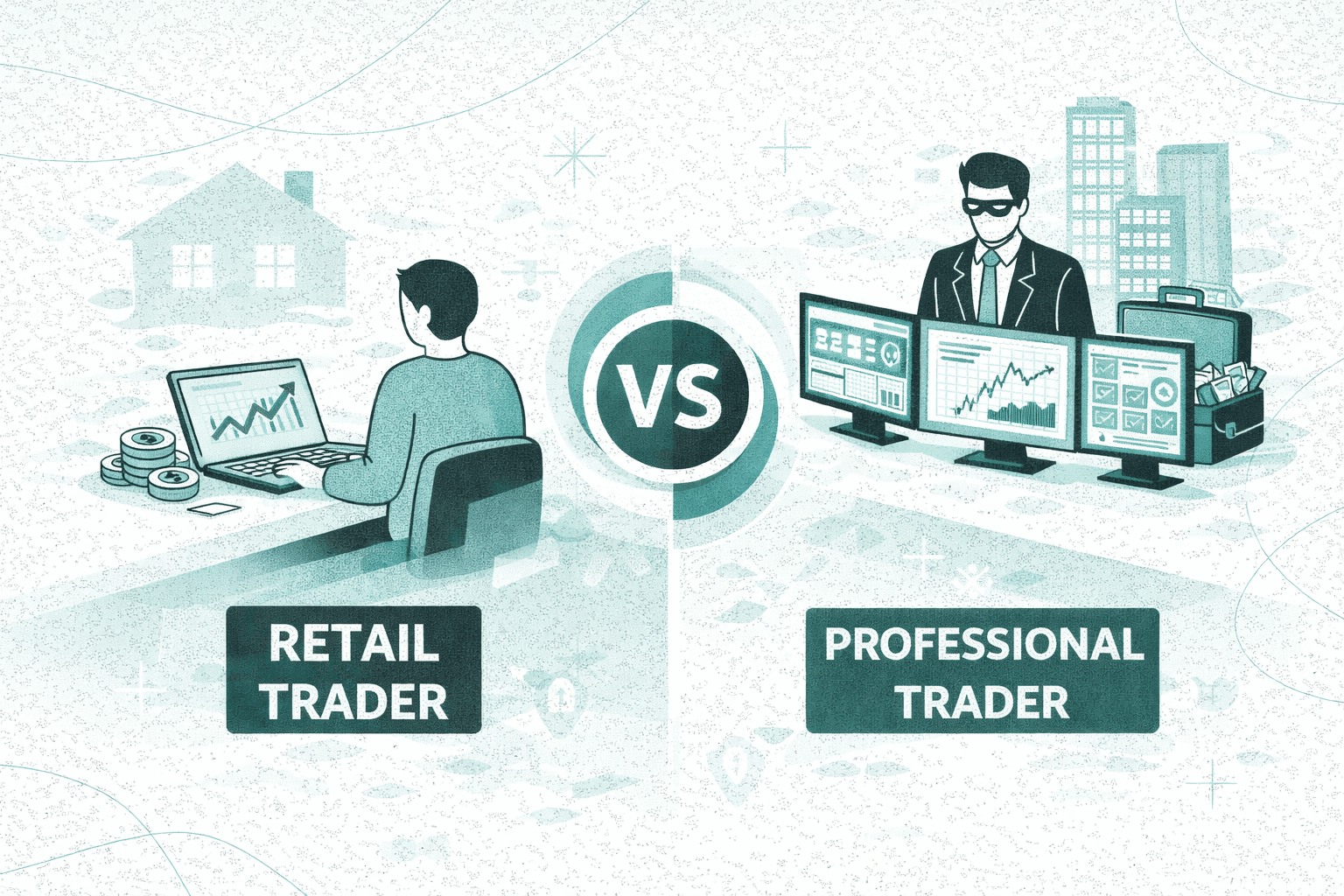
Whether you're just beginning to explore trading or you're looking to level up, understanding the difference between prop trading and retail trading is essential. This guide breaks down the two approaches—how they work, what they offer, and why one may suit you better depending on your goals.
What Is Retail Trading?
Retail trading is what most people start with: trading with your own money through online brokers like MetaTrader, cTrader, or TradingView. You're fully responsible for your capital, risk, tools, and learning.
Retail traders are self-funded, which means:
-
You trade your own capital
-
Profits (and losses) are 100% yours
-
You can trade at your own pace
-
There's complete freedom, but also complete risk
Retail trading appeals to many because it's accessible. You can open an account with as little as $100. But the downside? Limited capital often means limited profits—unless you're overleveraging, which brings significant risk.
What Is Prop Trading?
Proprietary trading, or prop trading, is when you trade using a firm's capital instead of your own. The firm gives you access to large funded accounts (e.g., $25,000, $100,000, or more), and in return, you split a portion of the profits you generate.
To get access to a funded account, traders typically must pass a challenge or evaluation that proves they can trade consistently and manage risk.
Prop trading benefits include:
-
Zero personal capital at risk (after challenge fees)
-
Large accounts = higher profit potential
-
Performance-based growth—the more consistent you are, the more capital you manage
-
Structured trading rules to keep you disciplined
Key Differences at a Glance
Let’s break down some core distinctions:
1. Capital Risk
-
Retail: You risk your own money. If you blow up your account, it's gone.
-
Prop: You risk the firm’s capital. If you lose, you might lose the account access, but not your savings.
2. Profit Retention
-
Retail: You keep 100% of your profits (after spreads/fees).
-
Prop: You typically keep 70–90% of profits, depending on the firm.
3. Growth Potential
-
Retail: You grow slowly unless you add more personal capital.
-
Prop: You can scale up quickly if you're consistent—many firms allow funded accounts to grow up to $500,000+.
4. Tools and Support
-
Retail: You’re on your own. You research, test, and build discipline solo.
-
Prop: Many firms offer dashboards, analytics, mentoring, and risk managers to guide you.
5. Psychological Impact
-
Retail: Fear of losing your own money can lead to emotional trading.
-
Prop: Knowing you’re trading someone else’s capital can free you mentally—if you're disciplined, this is a game changer.
Why More Traders Are Switching to Prop Firms
Retail trading may be accessible, but it often becomes a lonely and undercapitalized grind. You deposit $500, trade micro-lots, and spend months growing to $700—only to wipe it out in a bad week.
Prop trading flips this dynamic. For a small upfront fee, you can attempt an evaluation and, if successful, get access to tens or hundreds of thousands in trading capital. Suddenly, your 5% monthly gain isn’t $25—it’s $2,500.
And that’s why prop trading is exploding in popularity: it lets talent rise without needing deep pockets.
Where to Start: Recommended Prop Firm for New Traders
💡 Looking for a trusted prop firm to get started with?
I highly recommend checking out The5ers. They offer trader-friendly challenges, instant funding options, and scaling plans that reward consistency. Whether you're brand new or already experienced, The5ers gives you the opportunity to trade with serious capital—without risking your own money.
👉 Click here to join The5ers and get funded
Which Is Right for You?
If you have limited capital but solid skills, prop trading is the fastest way to professionalize your trading. You can start with a $100–$300 challenge fee and end up managing a $100,000+ account.
If you're experimenting, learning, or building confidence, retail trading offers low-pressure flexibility. You can trade small and refine your strategy without firm rules or targets.
In truth, you don’t have to choose one or the other forever. Many traders start retail, then transition to prop once they’ve built enough consistency. Others trade both side by side.
Final Thoughts
Retail trading is where most traders begin, but many struggle to grow due to lack of capital and support. Prop trading offers an alternative—a faster track for disciplined traders to access real opportunity and build a career.
The key is preparation. Prop firms don’t fund gamblers—they fund consistency, control, and discipline. If you’re ready to step up, now is the best time to explore the world of prop trading.
And if you're looking for a reliable place to begin, don’t overlook The5ers—a prop firm built for real traders with real goals.


Comments
Post a Comment